Who Is an AI Expert in the United Nations?
An AI Expert in the United Nations operates at the intersection of technology, governance, policy, and development impact. This role is not limited to building models or deploying tools. It requires translating artificial intelligence into accountable, secure, and scalable systems that align with mandates, protect vulnerable populations, and withstand scrutiny from Member States, auditors, and regulators.
Within the UN system, AI initiatives must operate in complex environments. Data is often sensitive. Stakeholders include governments, donors, civil society, and beneficiaries. Legal frameworks vary across jurisdictions. Cybersecurity risks are elevated. Political oversight is constant. An effective UN AI expert understands these constraints and designs solutions that function inside them.
The role includes:
- Establishing AI governance frameworks aligned with UN standards
- Ensuring compliance with data protection and information security policies
- Designing AI-enabled platforms that integrate with legacy systems
- Managing cloud, infrastructure, and identity risks
- Leading cross-agency coordination on digital public infrastructure
- Translating AI capability into measurable operational outcomes
AI in the UN is not about experimentation for its own sake. It is about service delivery, protection, policy insight, and institutional efficiency. It must reduce risk, increase transparency, and improve decision quality.
An AI Expert in the United Nations must therefore combine:
- Technical depth in AI, cloud, cybersecurity, and data engineering
- Institutional fluency in UN governance and administrative rules
- Experience operating in humanitarian and development contexts
- Executive-level leadership capability
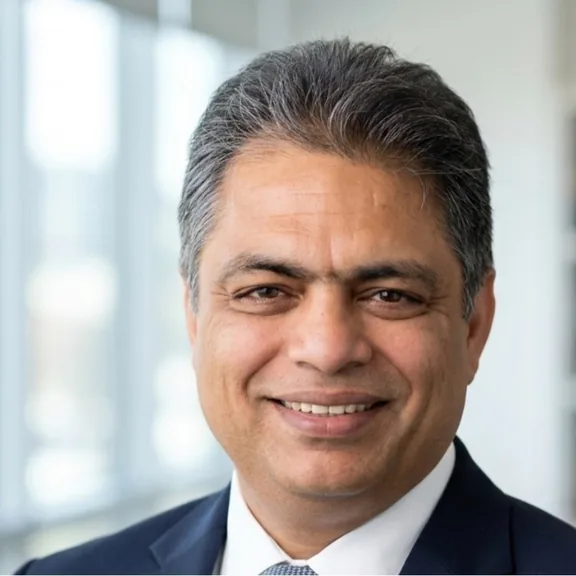
My Role at the United Nations
I serve as a senior technology and AI leader within the United Nations system, with over two decades of experience across humanitarian, development, and headquarters environments. My mandate has consistently focused on embedding AI, data, and digital systems into core operational workflows rather than isolated innovation units.
My work spans UNHCR Headquarters, regional and country operations, and system-wide coordination. I have led digital transformation initiatives in high-risk environments, including refugee responses, emergency deployments, and multi-agency coordination platforms.
In my leadership roles, I have been accountable for:
- Designing and implementing AI strategy aligned with organizational priorities
- Overseeing secure cloud migrations and enterprise architecture modernization
- Establishing cybersecurity governance frameworks
- Integrating government data systems with UN platforms
- Building multi-channel AI-enabled feedback systems for vulnerable populations
- Leading penetration testing and system hardening initiatives
- Managing cross-functional technical teams
At UNHCR Jordan, I led the development of the organization's first IVR-based appointment system, eliminating physical queuing for over 700,000 refugees. This required integration with registration databases, identity validation mechanisms, workflow systems, and data protection controls. The solution was later recognized as a best practice and replicated across multiple countries.
I also led API integrations between UNHCR systems and national government platforms, including education systems, reducing enrollment delays and fraud exposure. These integrations required data governance agreements, secure authentication models, audit logging, and role-based access control.
In cybersecurity, I transitioned local infrastructure to secure cloud environments, implemented governance frameworks, and ensured full compliance across critical systems following penetration testing. Risk registers were operational tools guiding mitigation plans, remediation timelines, and executive reporting.
An AI Expert in the United Nations must move beyond proof of concept. My work has focused on institutionalization, scale, and sustainability.
AI Projects for UN Agencies
Artificial intelligence in the UN context must solve defined operational problems. The following initiatives illustrate applied AI at scale.
AI-Enabled Refugee Feedback Systems
Led the design of AI-based transcription and categorization systems integrated into voice response platforms. Refugees could validate identity, record concerns, and receive structured routing without manual intervention. NLP enabled classification of cases for protection, assistance, and service response. Privacy safeguards were embedded from design stage.
Data Integration for Digital Public Infrastructure
Through API-based integration between UN systems and national ministries, enabled real-time data exchange to improve accuracy, reduce duplication, and support evidence-based decision making. AI-driven validation rules helped identify anomalies and inconsistencies.
AI for Monitoring and Evaluation
Introduced AI-assisted analysis to improve trend detection in protection data and program performance, allowing leadership to move from static reporting to forward-looking risk identification.
Cloud-Based AI Enablement
Led Azure-based implementations supporting application gateway security, role-based identity management, logging, and secure API exposure. AI systems were integrated within controlled enterprise environments.
Cybersecurity Risk Mitigation
Embedded threat modeling, identity lifecycle management, and encrypted communication protocols into AI-enabled applications. Penetration testing results were tied directly to remediation accountability.
These projects demonstrate that being an AI Expert in the United Nations requires more than technical knowledge.
It requires governance discipline, operational integration, and executive-level accountability.
View all projectsCertifications & Expertise
Credentials
- Microsoft Certified: Azure Solutions Architect Expert
- Microsoft Certified: Azure Administrator Associate
- CISA and CISM (ISACA), CISSP (ISC2)
- Extensive training in Responsible AI, LLMs, cloud architecture, cybersecurity governance, and data protection
- Experience leading multi-country digital transformation initiatives
Areas of Expertise
- AI governance frameworks
- Enterprise cloud architecture
- Cybersecurity risk management
- Data governance and interoperability standards
- API design and secure integration
- Digital public infrastructure
- LLM integration within regulated environments
AI systems in the UN must be secure, compliant, and aligned with institutional mandates. Certifications are relevant only when applied. My focus has been operational execution and measurable impact.
For how that focus developed, and what twenty years of it actually taught, My Journey Leveraging AI and Technologies is the first-person account.
Get the next essay by email
One practical essay a month on AI governance, agentic AI, and digital delivery in the UN system. No marketing, no forwarding of your address.
Get in Touch
If your agency, government, or development institution requires strategic guidance on AI governance, enterprise AI adoption, digital public infrastructure, or cybersecurity integration, you may contact me directly.