SHAHZAD ASGHAR · SENIOR IT STRATEGY AND PORTFOLIO OFFICER, UNRWA
AI governance and digital transformation in the United Nations
I help UN agencies and member states deploy AI that is accountable, secure, and useful in the field.
Currently writing about agentic AI in regulated UN workflows.
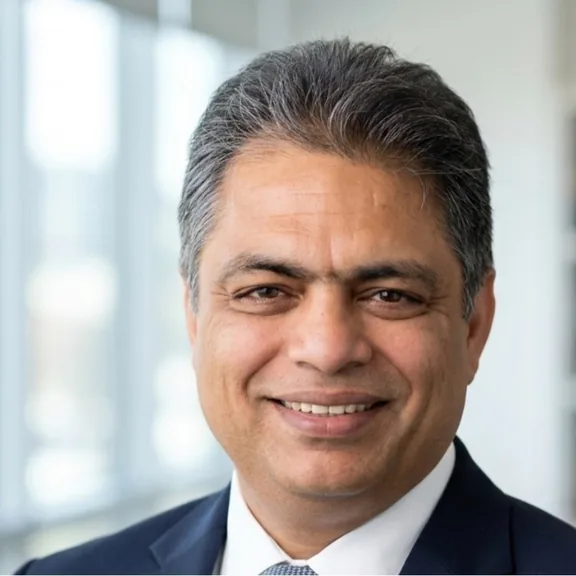
Photographed in Beirut, 2025
Career across international institutions
DigitalAAP was selected for the UN Global Pulse Accelerator, October 2025.
Outcomes, not output
700,000+
Refugees supported
Led the development and launch of UNHCR's first global IVR appointment system, improving access to registration and resettlement services at scale.
75%
Reduction in service time
Reduced refugee registration service time through workflow redesign and digital improvement.
63,000
Missing contacts recovered
Recovered missing refugee contact relationships through forensic data-quality and record-linkage analysis.
5 countries
Solutions replicated
Solutions were recognised and replicated in Egypt, Iraq, Syria, Iran, and Ethiopia.
Selected work
UNHCR · 2023 · Shipped
Digital AAP
I led the development of Digital AAP, an AI-enabled accountability platform designed to strengthen two-way communication with affected populations. It supports structured feedback intake, analysis, escalation, and management reporting to improve response and service quality.
Read case study about Digital AAPUNHCR · 2023 · Piloted
AI-Enabled Voice Feedback System
I developed the concept and delivery approach for an AI-enabled voice feedback solution that captures spoken messages, transcribes them, classifies them, and routes them for follow-up. It improves accessibility for low-literacy users and gives managers better visibility into issues at scale.
Read case study about AI-Enabled Voice Feedback SystemUN-ESCWA · 2024 · Shipped
AI for Policy and Decision Support
I led AI and data solutions that convert fragmented operational information into structured insight for senior management. These tools support planning, prioritization, policy review, and oversight.
Read case study about AI for Policy and Decision SupportUNHCR · 2024 · Concept
Agentic AI for Sensitive Reporting
I designed the concept for an agentic AI workflow to support confidential intake of sensitive protection-related reports through familiar channels such as WhatsApp. The design emphasizes privacy, safeguarding, secure routing, and controlled workflow handling.
Read case study about Agentic AI for Sensitive ReportingUN-ESCWA · 2024 · Shipped
AI-Enabled HR and Attendance System
I led the development of an AI-enabled internal workflow to improve attendance tracking, HR follow-up, and management visibility through conversational and workflow-based automation.
Read case study about AI-Enabled HR and Attendance SystemUN-ESCWA · 2025 · Piloted
AI-Based Job Matching Platform
I developed the concept for an AI-powered job matching platform that links people with relevant opportunities based on skills, experience, and role requirements, improving match quality and reducing screening effort.
Read case study about AI-Based Job Matching PlatformThe method
Most AI failures I have seen in twenty years were not model failures. The system assumed connectivity that was not there, a language it did not support, or a governance step that was skipped under deadline pressure. This is the sequence I follow instead, and each step exists because skipping it is what I have watched fail.
Start from the operating reality
Ask what has to be true for the system to be trusted where it will actually run, before choosing any model or vendor.
Decide the resolution question
Most operational decisions need patterns, not persons. Producing person-level data you do not need is liability, not thoroughness.
Name the accountable owner
Write down who accepts the output, who may switch the system off, and the observable condition that triggers it.
Test in your working languages
A model that performs well in English can fail in Arabic dialects, Urdu, or local languages. Your users do not speak the average.
Put a human at the points of consequence
Not everywhere, which kills the value, but wherever a wrong output touches a person.
Monitor after launch
Assign a review date at approval. Systems drift as data, vendors, and context change around them.
Framework · Citable preprint
The Last-Mile AI Framework
The delivery framework behind the work above: building AI that holds up under low connectivity, many languages, sensitive data, and strict governance. Published with a DOI so it can be cited.
Read the frameworkPlaybooks · Free templates
Six practical AI playbooks
Governance, security and assurance, sovereign AI strategy, centres of excellence, use case discovery, and workforce capability. Each one gives twelve rules of thumb, templates you can use without modification, and the signals that tell you it is failing.
Open the playbooksRecent writing
Building AI Systems Where Infrastructure Fails: Lessons from 20 Years in the UN
Lessons from building AI across UNHCR, UNICEF, UNOCHA, and ESCWA in environments with unreliable infrastructure, fragmented data, and multilingual users.
2026
Read articleAgentic AI Explained Through a Humanitarian Workflow
A worked example of planning, tool use, retrieval, escalation, human approval, logging, and safe stopping conditions.
2026
Read articleSeven Decision Rights for AI Governance in UN Agencies
The approval, data, deployment, oversight, incident, audit, and shutdown rights an institution must assign before AI goes live.
2026
Read articleWriting and speaking
I write and speak on AI governance, digital transformation, cybersecurity, humanitarian technology, and the practical use of AI in regulated environments.
Featured articles
Building AI Systems Where Infrastructure Fails: Lessons from 20 Years in the UN
2026
Agentic AI Explained Through a Humanitarian Workflow
2026
Seven Decision Rights for AI Governance in UN Agencies
2026
Speaking engagements
UN 2.0 Innovation Forum
Presented to 300+ officials from 36 agencies. 2024.
MENA Regional Cybersecurity Workshop
Regional cybersecurity training across Middle East and North Africa. 2023.
UNHCR Innovation Events
Regular presenter on AI for humanitarian operations. 2022-2024.
What I work on
Five subjects, each with a main reference page and the articles, templates and playbooks that sit under it.
Reference and learning material
Open reference material I maintain alongside the playbooks, for teams who need the underlying concepts rather than a delivery process.
Reference
- AI glossarydefinitions of the terms in AI policy and procurement documents
- Core AI conceptsthe ideas behind the tools, without mathematics
- LLM architecture explainedtokenization, embeddings, attention and the Transformer block
- NIST AI RMF playbookthe four functions applied to a public-sector deployment
- Areas of practicethe problems I work on and the methods I use
Applied domains
- IT audit of AI systemshow internal and IT audit test a system that learns or acts
- UN Scientific Panel on AIwhat the UN's first global scientific body on AI can and cannot do
- AI in healthwhere health data constrains what can be deployed
- AI in health live demoone synthetic patient record serving patient, doctor, hospital and public health
- AI and economic impactwhat the evidence supports on productivity and employment
- Learn LLMsa guided introduction to large language models
- Learn AI agentsa guided introduction to agentic systems
Learning tracks
- Foundations trackstart here if AI is new to you
- Context trackretrieval, context windows and grounding
- Practice trackputting models into a working process
- Agents trackhow agentic systems are designed and where they fail
Individual modules
- Context engineering 101deciding what belongs in the context window
- Context vs prompt engineeringwhy the distinction changes how you build
- Reinforcement learning 101learning from feedback rather than examples
About
I am currently Senior IT Strategy and Portfolio Officer at UNRWA in Amman. Previously, I led data and digital solutions at UNESCWA and spent 15 years across UNHCR, UNICEF, UNOCHA, and CIDA, building systems that served 700,000+ refugees. The rule has not changed since my first data job at a hospital in Islamabad in 2005: build for the person at the end of the system, and prove it worked with numbers you can defend.
What I am working on now: agentic AI governance frameworks for UN field operations. Updated May 2026.
Get the next essay by email
One practical essay a month on AI governance, agentic AI, and digital delivery in the UN system. No marketing, no forwarding of your address.
Get in touch
For advisory and AI governance work — shahzad.cdcu@gmail.com
For speaking and media — shahzad.cdcu@gmail.com · Press and speaker kit
For career and hiring — Connect on LinkedIn
Amman, GMT+3 · Replies within two working days.