The Model Context Protocol (MCP): The USB-C for AI Applications
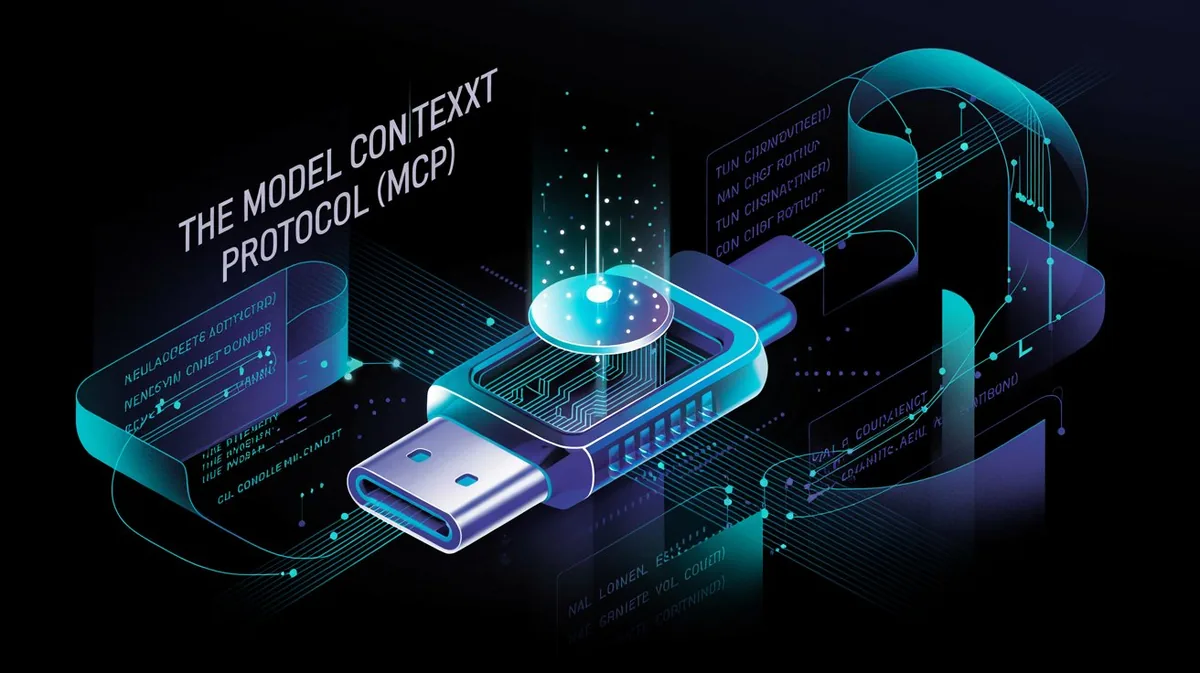
The Model Context Protocol (MCP) is a standard that connects AI applications to external data sources and tools the way USB-C unified device connectivity. Instead of custom connectors for every API or database, MCP clients send structured requests to MCP servers, reducing development time, maintenance cost, and long-term technical debt while supporting enterprise security requirements.
Published 2025-04-02 · By Shahzad Asghar
The Model Context Protocol (MCP): A Universal Standard for AI Interoperability
In an era where artificial intelligence (AI) applications are expected to deliver real-time insights and execute complex tasks, seamless integration with external data sources and tools is no longer optional—it's essential. The Model Context Protocol (MCP) emerges as a groundbreaking open standard designed to bridge the gap between AI systems and the ever-expanding ecosystem of external resources.
Understanding MCP: The USB-C Analogy
Much like USB-C revolutionized connectivity by unifying ports across devices, MCP standardizes how AI applications interface with databases, APIs, and specialized tools. By eliminating the need for proprietary integrations, MCP empowers developers to focus on innovation rather than reinventing connectivity frameworks.
How MCP Works: Architecture and Components
MCP operates through two core components:
1. MCP Clients
- AI applications (e.g., chatbots, virtual assistants) that require external data or functionality.
- Example: A customer service chatbot needing live inventory data to confirm product availability.
2. MCP Servers
- External systems providing specific capabilities (e.g., databases, payment gateways, IoT platforms).
- Example: A CRM server delivering real-time customer interaction history.
Process Flow:
- An MCP Client sends a structured request (e.g., retrieving stock prices or initiating a transaction).
- The MCP Server processes the request, leveraging its specialized resources.
- The server returns formatted data or confirms task completion.
- The AI application delivers a context-aware response or action.
Key Benefits of MCP
1. Standardization
MCP replaces fragmented, custom integrations with a unified protocol. Developers no longer need to build bespoke connectors for every API, database, or service—reducing development time, costs, and maintenance overhead.
2. Flexibility and Scalability
- Dynamic Resource Switching: Seamlessly transition between data providers (e.g., weather APIs, financial databases) without altering core AI logic.
- Modular Architecture: Integrate new tools or update existing ones independently, ensuring systems remain agile as business needs evolve.
3. Enhanced AI Capabilities
- Real-Time Data Access: Enable AI systems to leverage live information (e.g., market trends, IoT sensor data).
- Task Automation: Execute actions such as scheduling, payments, or inventory updates directly through integrated services.
4. Enterprise-Grade Security
MCP's standardized framework supports built-in security protocols, ensuring secure data transmission and compliance with regulations like GDPR or HIPAA.
Use Cases: MCP in Action
1. Financial Services
AI-powered advisors use MCP to pull live market data, execute trades, and generate personalized portfolio insights.
2. Healthcare
Virtual assistants retrieve patient records from EHR systems and schedule appointments via clinic management tools.
3. Retail
Chatbots check inventory levels, process returns, and update loyalty points by connecting to POS and supply chain systems.
4. Smart Cities
AI controllers optimize traffic flow by aggregating data from IoT sensors, public transit APIs, and emergency services.
Why MCP Matters for the Future of AI
As AI systems grow more sophisticated, their reliance on external data and tools will only intensify. MCP addresses critical challenges in three areas:
- Interoperability: Break down silos between AI platforms and legacy systems.
- Speed to Market: Accelerate deployment by minimizing integration bottlenecks.
- Cost Efficiency: Reduce long-term technical debt associated with custom connectors.
For enterprises, MCP unlocks the full potential of AI investments, enabling applications to evolve alongside technological advancements without costly overhauls.
Conclusion: Embracing a Connected AI Ecosystem
The Model Context Protocol represents a paradigm shift in AI development. By standardizing how systems interact with external resources, MCP empowers organizations to build smarter, more adaptable AI solutions that thrive in dynamic environments.
For developers, adopting MCP means less time wrestling with APIs and more time focused on creating value. For businesses, it translates to AI applications that are future-proof, scalable, and capable of driving transformative outcomes.
Written by Shahzad Asghar — Head of Data and Digital Solutions at UN-ESCWA, with 20+ years building AI and data systems across UNHCR, UNICEF, and UNOCHA. His team built UNHCR’s first global IVR appointment system, serving 700,000+ refugees. He created the Last-Mile AI Framework. Read more about this UN AI expert